
The Gorge
A term with no standing in the official lore of the Quake franchise.

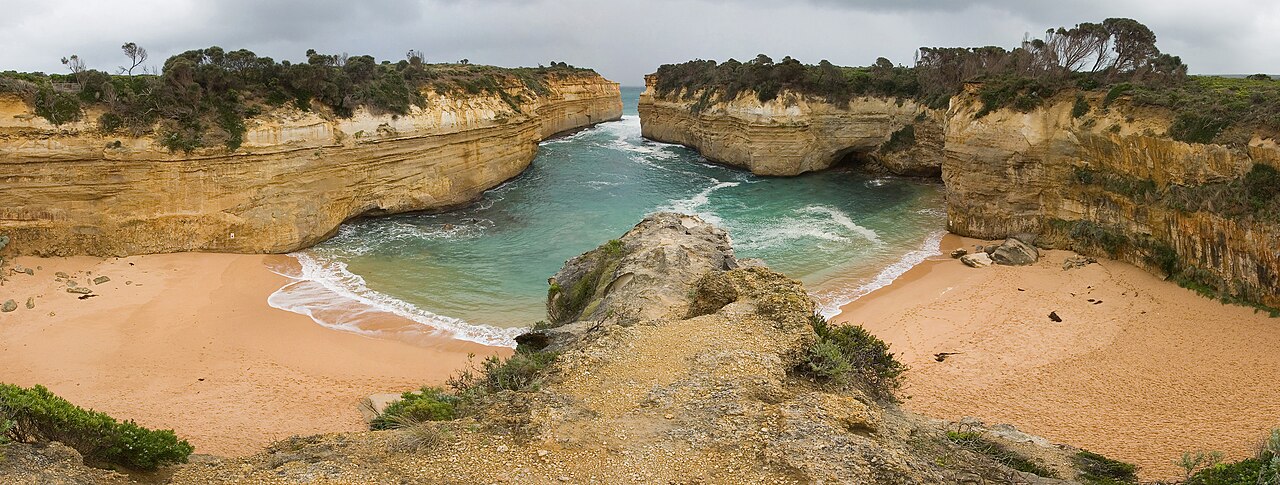
Dirk Beyer · CC BY-SA 3.0
The Gorge is not a canonical campaign, character, or location within the Quake video game franchise developed by id Software and its licensed partners. The term does not appear in the official lore of games such as Quake, Quake II, Quake III Arena, Quake 4, or Quake Champions, nor is it associated with established entities like the Strogg, the Ravenloft, or the Breen. While fans may occasionally use descriptive terms for specific map features within levels, 'The Gorge' holds no authoritative status as a named narrative element in the series.
- Status
- Non-existent in official canon
- Franchise
- Quake
- Developer
- id Software (and licensed partners)
- Nature
- Misconception or fan terminology
Lore & Background
The narrative universe of Quake is defined by specific, documented conflicts: the breach between dimensions in the original game, the industrial war against the Strogg in Quake II, and the arena-based spiritual battles in later entries. There is no record within official manuals, developer commentaries, or in-game text files that establishes 'The Gorge' as a significant location or event. Any reference to such a place likely stems from community misinterpretation of generic level geometry, such as canyon-like areas found in maps like 'E1M2: The Grotto' (which is distinct) or third-party modifications. In the strict canon maintained by id Software, only verified locations and plot points are considered authoritative.
In Their Own Story
The silence of the void is absolute here, where no named gorge exists to break the horizon. The Ranger checks his log again, searching for a landmark that the maps do not list. There is only the jagged rock and the distant hum of the portal, but no 'Gorge' to anchor his memory.
Reader's Guide
The Quake storyline follows a linear progression through distinct dimensions and conflicts without a chapter or location titled 'The Gorge'. The narrative begins with the Ranger's accidental opening of portals in the original game, leading to the invasion of Earth by the demons. Subsequent entries shift focus to the Strogg rebellion in Quake II and the supernatural arena battles in later titles. No character motivations or mythological arcs revolve around a place called 'The Gorge', as it is not part of the established continuity. Players should consult official sources for verified locations such as the Citadel, the Stroggosphere, or the various arenas to understand the true scope of the franchise's mythology.
Did You Know?
- No map in the original Quake (1996) is officially named 'The Gorge'.
- Quake II features industrial and jungle environments but no canonical gorge location.
- Fan-made mods sometimes create custom levels with descriptive names not found in official releases.
- Official lore documents from id Software do not reference a narrative event called 'The Gorge'.
Engineering Scale and Power Dominance
The Three Gorges Dam stands as a monumental feat of modern civil engineering, officially recognized as the world's largest power station by installed capacity. Spanning an impressive 2,309 meters across the Yangtze River near Yichang, this concrete gravity dam rises 185 meters high. Its sheer magnitude is evident in the materials required for its construction, which included over 27 million cubic meters of concrete and enough steel to construct roughly 63 Eiffel Towers. The facility houses 32 massive main water turbines, each capable of generating 700 megawatts, alongside two smaller generators dedicated to powering the plant itself. This configuration allows for a total output of 22,500 megawatts, significantly surpassing the next largest hydroelectric facility in China. The project reached full operational status in 2012 with the activation of the underground power station, and its final major component, a specialized ship lift, was completed three years later.
Historical Vision and Political Journey
The concept of damming the Yangtze River has deep historical roots, first envisioned by Sun Yat-sen in 1919 as part of his broader plan for China's international development. Early planning efforts continued through the Nationalist era, including a detailed proposal by American engineer John L. Savage in 1944, though war and civil conflict halted progress. Following the Communist Revolution, Mao Zedong championed the project, famously referencing it in his 1956 poem "Swimming," yet economic turmoil delayed actual construction for decades. It was not until the Reform and Opening Up period that plans were revived, leading to a contentious vote by the National People's Congress in 1992. The approval rate was unusually low at roughly 67 percent, reflecting significant domestic debate before construction finally commenced in December 1994.
Economic Recovery and Energy Output
Economically, the Three Gorges Dam has proven to be a massive success for China's infrastructure and energy grid. Initially estimated to cost around 22.5 billion US dollars, the project was fully funded through a combination of construction funds, profits from the nearby Gezhouba Dam, and various loans. Remarkably, the entire financial investment was recouped by December 2013, just one year after full operations began, driven by the sale of electricity generated over its first decade. The dam averages an annual production of approximately 95 terawatt-hours, a figure that surged to nearly 112 terawatt-hours in 2020 following heavy monsoons. This record-breaking output not only broke previous global records but also provides the clean energy necessary to fuel China's rapid economic expansion while reducing reliance on fossil fuels.
Social Displacement and Environmental Impact
Despite its engineering triumphs, the Three Gorges Dam remains a subject of intense controversy due to its profound human and ecological costs. The creation of the reservoir required the relocation of between 1.13 million and 1.4 million people, one of the largest forced migrations in history. Furthermore, the rising waters inundated numerous ancient sites of significant cultural heritage, erasing parts of China's historical landscape permanently. Ecologically, the dam has altered the river system, leading to changes such as an increased risk of landslides along the reservoir banks. While the structure provides critical flood control for millions living on the Yangtze Plain and enhances shipping capacity, these benefits are weighed against the irreversible loss of land, culture, and environmental stability.
Gallery

Frequently Asked Questions
Is The Gorge part of the official Quake storyline?
No, The Gorge does not exist in any canonical material from id Software or licensed partners. It is considered a misconception rather than an established narrative element within the franchise.
Who is The Gorge as a character?
There is no character by this name in games like Quake, Quake II, or Quake 4. Fans sometimes use descriptive terms for map features, but it holds no authoritative status as an entity.
Does The Gorge appear in any campaign?
This term does not appear in the official lore of any mainline title or expansion pack. References to it usually stem from community speculation rather than developer documentation.
Why is The Gorge important to fans?
It holds no actual importance within the series history because it is non-existent in official canon. Any perceived significance comes from unofficial discussions or confusion over level design terminology.
What are The Gorge's powers or role?
Since this entity is not part of the real lore, it possesses no defined powers or narrative role. It should not be confused with established factions like the Strogg or Ravenloft entities.
More in Campaigns & Lore
Elsewhere in the Quake universe
Spotted an error? Know more?
This is a living reference — every entry is fact-audited, and reader corrections feed straight into our audit queue. Suggest an edit · See this site's audit record